The store will not work correctly when cookies are disabled.
Cookie Preferences
We use cookies and similar technologies to enhance your experience and ensure smooth order processing and to improve our website by analysing visitor behaviour or personalise content and show relevant offers.
Essential cookies are required for the site to function and cannot be disabled. By clicking "Accept" you agree to all cookies, including analytics and marketing. To decline non-essential cookies, click "Decline".
How to Panel Multiple Walls in a Room: Complete Planning and Installation Guide
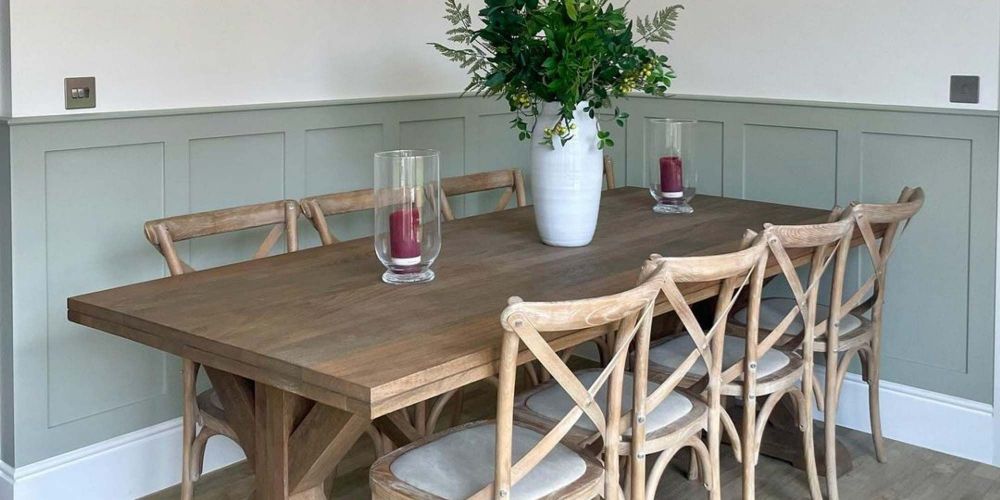
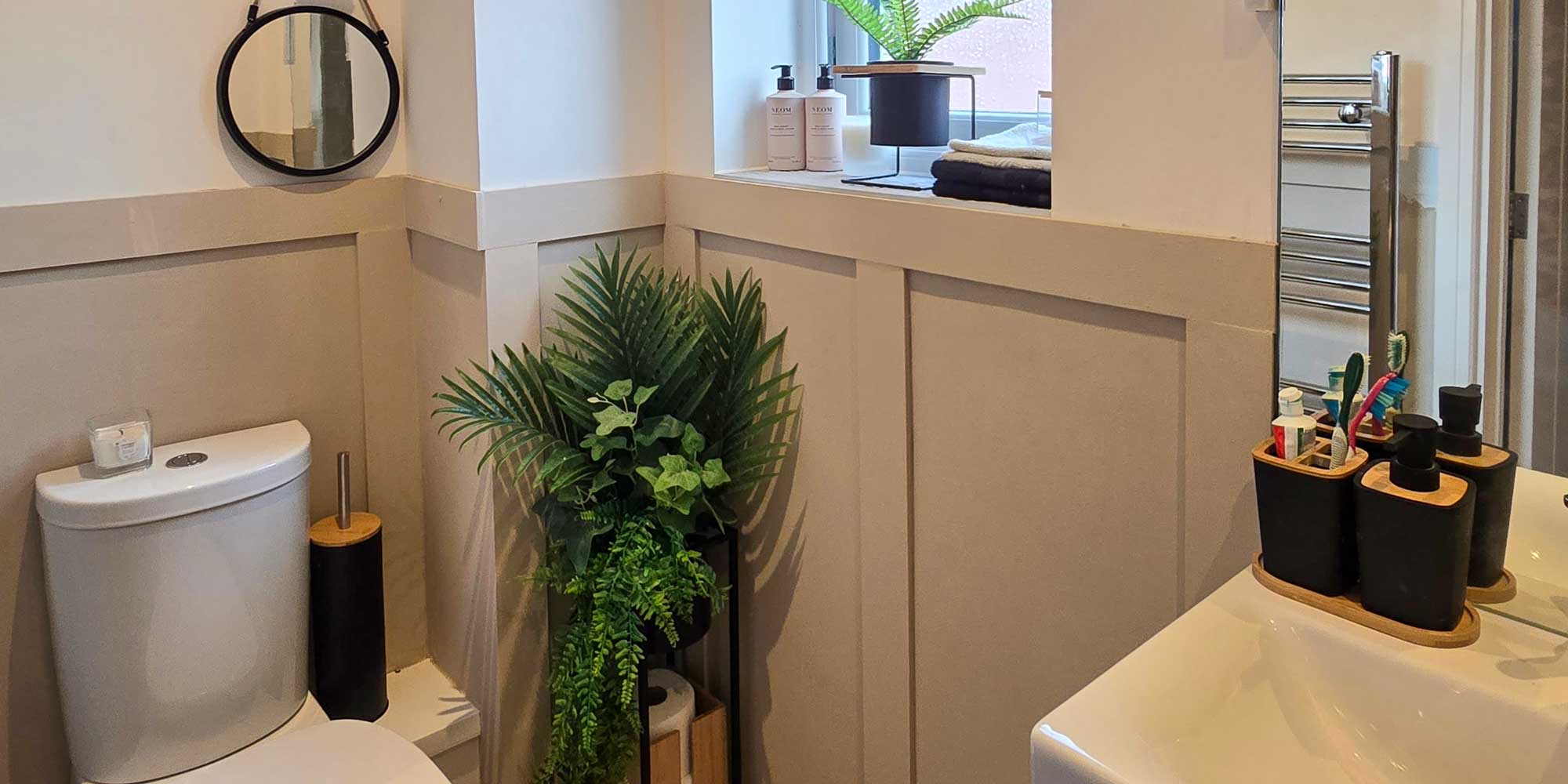
Panelling multiple walls in a room transforms an ordinary space into something truly special. Rather than the piecemeal look of single accent walls, multi-wall panelling creates a cohesive, luxury finish that adds significant value to your home. With multiple walls panelled, you can create striking visual effects like feature corners, wrap-around designs, or cohesive colour schemes that tie the entire space together. However, achieving that seamless, professional appearance requires careful planning, particularly around measurements, ordering, and ensuring consistent alignment where walls meet.
Here is a guide outlining key considerations to keep in mind before placing an order. It covers measuring, ordering, fitting, and managing dado rails.
Considerations Before You Start
The Two Main Approaches
Option 1: Individual Wall Kits - Order a separate kit for each wall. This is simpler to plan and install but may result in slightly different spacing between walls, creating minor visual discontinuities at corners or between column spacing.
For example: If one wall is 2400mm wide and another is 2200mm wide, shaker columns may not line up exactly across the corner, and both walls would have slightly different column spacing to each other.
Option 2: Combined Kit - Order one large kit sized for the total width of all walls combined. This ensures perfect spacing consistency but requires you to cut the panelling down for each wall and precise planning.
Option
Pros
Cons
1. Kit Per Wall
Simpler to order, pre-sized
Groove/batten spacing may not align across corners
2. Combined Total Kit
Consistent spacing across walls
Needs cutting down, more measuring up front
The choice between these approaches depends on your skill level, available time, and how critical perfect alignment is to your desired outcome.
Why Multi-Wall Panelling Needs Planning
Groove alignment or shaker spacing across adjoining walls
Wall thickness impact at corners
Ordering panels to fit either individual walls or full room dimensions
Measuring Your Room Correctly
Measure each wall from corner to corner
Account for skirting boards or dado rails already in place
Check both wall width and height for accuracy
Internal Corner Adjustments
Deduct panel thickness (e.g., 9–12mm) from adjoining walls when measuring. For example: If one wall has shaker panelling at 12mm thick, subtract that from the width of the adjoining wall.
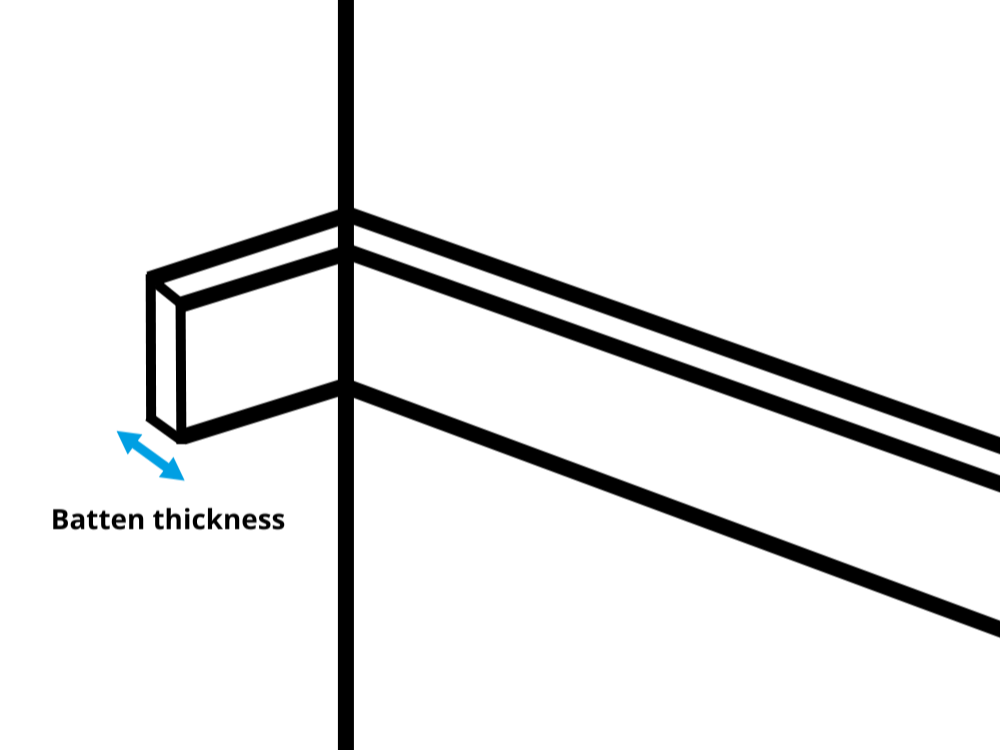
External Corner Adjustments
Add batten thickness to walls wrapping around an external corner.
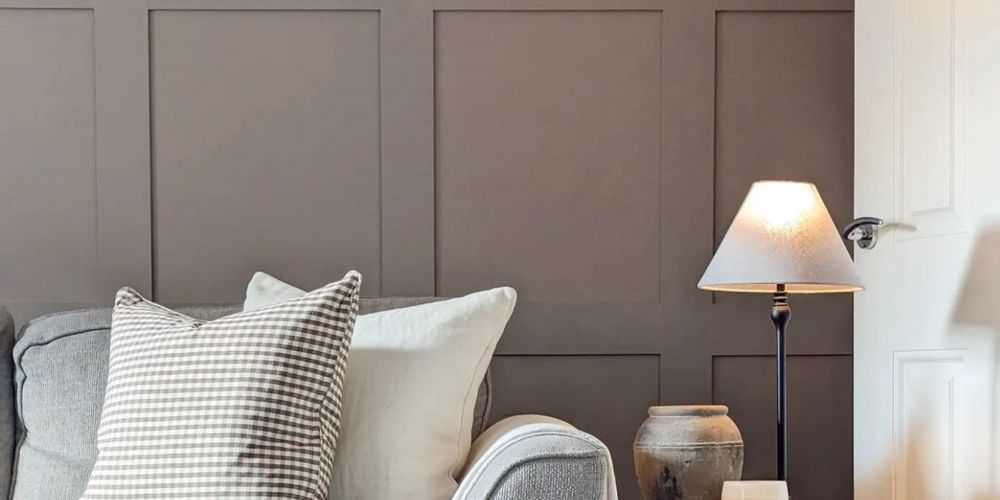
Shaker Panelling
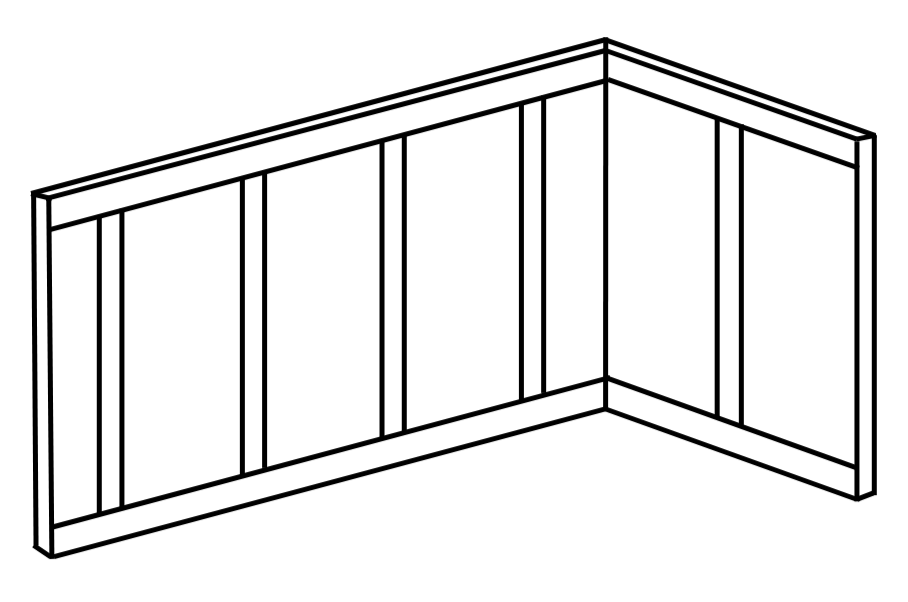
Shaker panelling creates a timeless grid-like pattern using vertical battens (columns) and horizontal rails. The key to professional-looking results across multiple walls is achieving consistent spacing between vertical battens, especially where walls meet at corners.
The Core Issue:
Each wall's batten spacing is determined by dividing the available wall width by the number of battens. When walls have different widths, this creates different spacing between battens, leading to visual discontinuity at corners.
Example of the Problem:
Wall A (2400mm): 4 battens = 465mm spacing Wall B (2200mm): 4 battens = 425mm spacing 40mm difference in width creates different panel spacing on each wall.
Option 1: Individual Wall Kits How it works: Order separate kits sized for each wall's adjusted width.
Pros:
Simpler to plan and order
You can tackle one wall at a time
Easier to manage storage and delivery
Cons:
If each wall is a different width, there is potential for different batten spacing on each wall.
Option 2: Combined Kit How it works: Order one kit sized for the total combined width of all walls.
Combined width = Sum of all adjusted wall widths Example: 3000mm + 2482mm + 1982mm = 7464mm Order one kit for 7464mm total width
Pros:
Perfect spacing consistency across all walls
Continuous visual flow around corners
Cons:
You will need to cut the horizontal battens to size for each wall
Corner Considerations
When panelling multiple walls:
Always measure wall widths from corner to corner.
If two walls meet, the panelling on one wall will reduce the starting point of the next wall by the panelling’s thickness.
For example: If Wall A is 1000mm wide and your battens are 9mm thick, once Wall A is panelled, Wall B now has 9mm less width starting from that corner. So you would record Wall B’s width as 991mm instead of 1000mm.
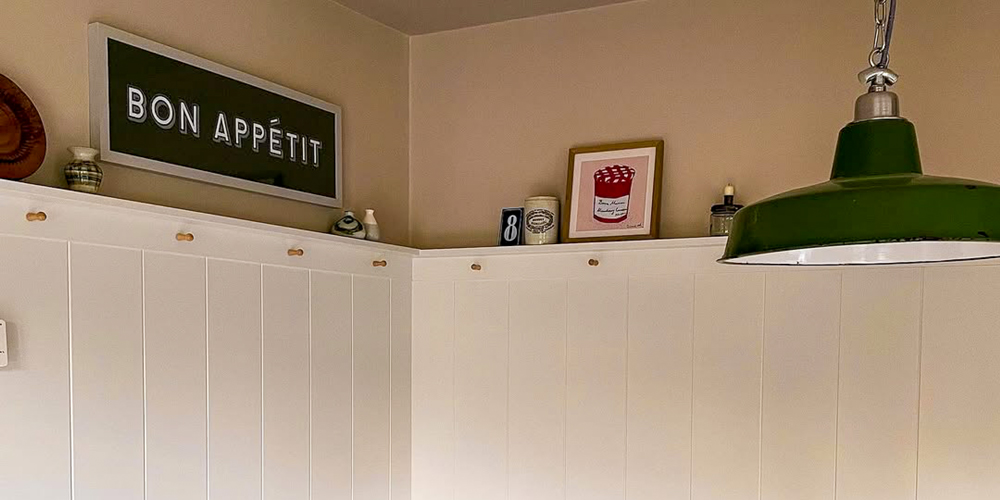
V-Groove Panelling
If you are planning to panel more than one wall using V-Groove panelling kits, there are some key layout and visual considerations that can affect how seamless your installation looks.
1. How V-Groove Kits Are Supplied
V-Groove panelling is cut into boards no wider than 600mm each for easier handling and delivery.
If your wall width isn’t an exact multiple of your chosen groove spacing (80mm, 120mm, 180mm, or 220mm), the two end boards—on the left and right—may be narrower than the other boards.
Groove Spacing Impact:
Groove layout is always centre-aligned. This means grooves are balanced around the centre of your wall, not simply repeated from left to right.
End segments may therefore be smaller to maintain that balance.
2. How Panels Are Cut for Joining
It is likely that you will have multiple boards making up the width of one wall. They are cut so they can be joined along a groove. This creates a seamless finish - grooves appear continuous with no visible flat panel joins between boards.
Left and Right End Panels:
The panels at the very left and right of a kit are cut at a straight 90-degree angle - not along a groove so that they sit flush against the wall.
These panels may have a narrower width than the standard groove spacing due to centre alignment.
3. What This Means for Panelling Multiple Walls
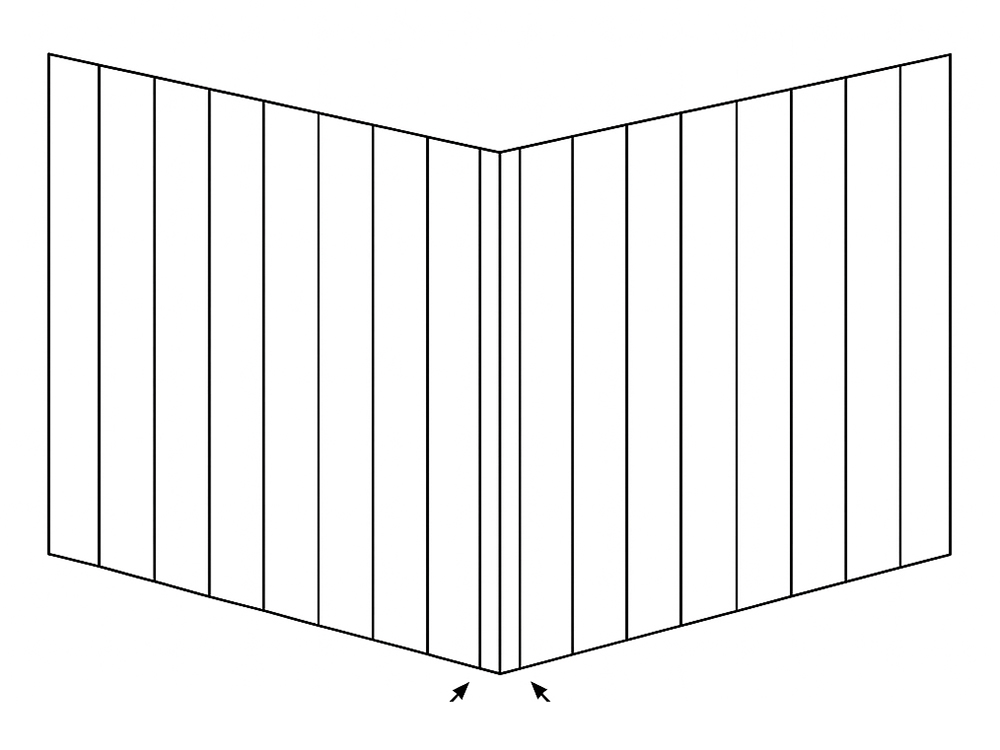
If you order a separate kit for each wall, each wall’s groove layout is calculated independently.
This means:
Groove spacing may not match perfectly where two walls meet - especially if the end panels on both walls are narrower than the main groove spacing.
At the corner join, you may see two smaller groove segments next to each other rather than a continuous groove pattern.
If you order one combined-width kit for all the walls together you can maintain consistent groove spacing across multiple walls, however you will need to cut panels yourself to fit each wall.
4. Handling Dado Rails
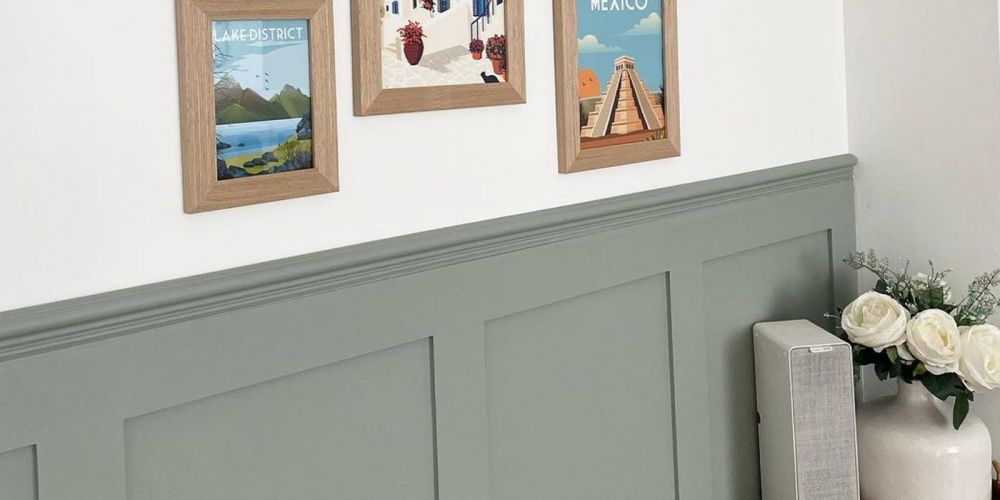
Shaker panelling often finishes with a dado rail on top:
For internal corners, you must mitre cut the dado at a 45-degree angle so it meets neatly.
For external corners, order additional length of dado and cut mitre joints outward.
➡️ Best Practice: Order dado separately rather than as part of your main kit, especially for multiple walls. This allows extra flexibility and helps ensure you have enough for corner cuts.
Tanya is a skilled digital marketing assistant and photographer with a passion for aesthetics. She offers insights and inspiration for DIY enthusiasts, empowering them to embark on their creative journeys with confidence.
We're Here to Help
Our Help Centre is available 24/7 to explore FAQs, discover DIY ideas and advice, and even ask our community of fellow DIY enthusiasts.
Simple ordering process, clear instructions, order arrived in record fast time. Will be ordering again!
Gail Davies-Walsh,
23 hours ago
Verified
Perfect for the job
The arrived well packed and on date stated. The acrylic was easy to work with and fitted perfect for the job I was using for. Would recommend.
Steve4659 Davies,
1 day ago
Verified
Second lot of this copper colour…
Second lot of this copper colour splashback we have bought, suits our kitchen well, good value, quick delivery
Goodtwin,
1 day ago
Verified
Excellent customer service
Excellent customer service. Purchased twice from this company. Very friendly. Great delivery service.
Mrs O'brien,
1 day ago
Verified
Impecable service
Impecable service, they delivered all the MDF pieces I ordered (c13), perfectly measured, packing was superb to prevent issues and it was done really quick. First time using them and I'd definitely recommend them.
L,
1 day ago
Verified
Replacing greenhouse glass
I placed an order to replace green house glass.
The cut pieces were the exact size and it made the job quick and easy. I had to cut one piece to an odd sharp which was a bit more difficult to do but with a bit of time and patience I managed.
This is a good quality product. Delivered in good time.
I would recommend this company and will use them again. Thank you
G J Tatum,
1 day ago
Verified
Lots of choice on the website
Lots of choice on the website. I managed to find everything I needed for a good price. It all arrived very well packaged and on time.
Cas,
1 day ago
Verified
Excellent service very pleased with the…
Excellent service very pleased with the delivery wrapped expertly and arrived in good time thanks would order again.
customer,
1 day ago
Love my new labelling for either side…
Love my new labelling for either side of the TV. Great company. No issues at all.
Just make sure you’re completely accurate with measurements when ordering online
Lucie Whitehead,
1 day ago
Verified
Very happy to recommend
Very happy to recommend. A good product at a good price.
Rachel D,
1 day ago
Verified
Cut to precision
Cut to precision, fast delivery and packaged perfectly to ensure no damage. Convenient and good value for money.
Matt H.,
2 days ago
Verified
good material
good material, very accurate cut, prompt delivery.
Nick Burridge,
2 days ago
Verified
Easy, fast and excellent quality
Easy ordering process, speedy delivery (faster than originally stated!) and excellent product.
Stephen McMahon,
2 days ago
Verified
Easy to use web site,perspex arrived…
Easy to use web site,perspex arrived well packed and fitted perfectly.
Good price aswell.
ian jeffery,
2 days ago
Called into the premises rather than…
Called into the premises rather than order online and the staff were very helpful. Placed an order which i was able to collect the following day. I had the material primed to save my time, the cuts were extremely clean and accurate, and the finished product was very well packaged. Would definitely recommend.
Gary Newton,
2 days ago
Verified
A perfect fit
A perfect fit, delivered when stated and very well packed.
Mal Haddon,
2 days ago
Cut My stands out a mile from the rest
Easy process end to end and the lowest prices I found after extensive searches.
I spent literally hours looking for simple gloss white slabs and found some absurd pricing and delivery charges. At the point of almost giving up I found Cut My and in a seamless process the order had gone through almost before I had realised.
Julian Bond,
2 days ago
Verified
Good product easy to fit.
Good product, easy to fit and was cut to size.
However, when I ordered it, the site was an overnight delivery next day as standard if ordered by 1200hrs. My order arrived day 5 or 6 with a small disclaimer on the order confirmation email.
Paul,
2 days ago
Verified
Great service
Great service
Efficient and cut precisely.
Will use again and highly recommend.
Rodney Hurd,
3 days ago
Verified
Does what it say
Does what it say, a good quality product as ordered.
Steve Davenport,
3 days ago
Verified
Very easy process from start to finish.
Very easy process from start to finish.
Chrys Burton,
3 days ago
Verified
It was a quick and reliable order
It was a quick and reliable order. Great customer service who respond swift and resolved the issue. Recommended
customer,
3 days ago
Verified
Looks great perfect size
Looks great perfect size
Steven Lemont,
3 days ago
Verified
Easy to use website
Easy to use website. Quick and easy to order what I needed and delivery was fast too. Great job!
Daniel Soundy,
3 days ago
Verified
I managed to break a large panel of…
I managed to break a large panel of glass in my greenhouse. So I decided to replace with a non glass panel. I ordered the panel it arrived promptly and very well packaged. I am pleased with the service provided and will certainly use Cut My again (hopefully not too soon).
Graham Vaughan,
3 days ago
Verified
Fantastic 😊
Absolutely loooove that I can order already cut MDF saving me the annoyance of 1. Getting the lines straight. But just how convenient it is.. delivered straight to my door who could ask for more. Little less stress , definitely worth it thank you my cut.
Lynda Comerford,
3 days ago
Verified
The quality is exceptional
The quality is exceptional. I had 2 shelves delivered. Very well packed. The quality is amazing!! I definitely recommend!!!
Maria Tsiatsiani,
3 days ago
Verified
Happy customer
I ordered two pieces of Perspex to repair two broken windows. It was easy to place the order online. The order came promptly and the pieces had been cut true to size. Maybe a little pricey for two smallish pieces, but no complaints about the order process or the delivery, or the quality of the product itself.
David Lawrence,
3 days ago
Verified
Brilliant speedy delivery
Brilliant speedy delivery, everything cut to size and good quality, properly clear acrylic sheets. Would absolutely use again.
Holly Ferrie,
3 days ago
Verified
great shelving.
The shelving was reasonably priced, is of great quality and was delivered promptly. I am very pleased.
NIEL CONNOLLY,
3 days ago
Verified
So easy to order
So easy to order, both Peices are perfect and fit mint. Thank you so much.
Mr Stephen Peter Kitching,
3 days ago
Verified
Easy to order and spot on
Really easy to order and arrived very quick. Spot on measurements too.
WC,
4 days ago
Verified
Easy to order and collect
Easy to order and collect
Richard,
4 days ago
Verified
Good advice prior to buying
Good advice prior to buying. Fairly easy to navigate the various shapes on offer and the order was delivered extremely promptly.
Catherine Alexander-Kiff,
4 days ago
Verified
Cut My sent me excellent quality…
Cut My sent me excellent quality acrylic splash-back samples, which arrived quickly. The colours weren't quite right for me so I have ended up buying ones the exact same to my worktop. Otherwise I'd have bought some using your excellent cutting service with cut-outs and fit them myself! I also easily got through easily to speak to a customer service agent to ask a technical detail about cut-outs (when I was considering using these acrylic ones) and they were very helpful. So I am impressed with this company! Thank you.
Gail Edgley,
4 days ago
Verified
It's just a great easy site to use and…
It's just a great easy site to use and follow, and when the parts arrive, they are very good, the machining is great, and they are well packaged.
Will use again.
Nick Williams,
4 days ago
Verified
Fits perfecly and looks good
Fits perfecly and looks good
Eleanor Johnstone,
4 days ago
Verified
All clear instructions on cut outs and…
All clear instructions on cut outs and the diagram helps a lot so you know what you are doing.
Palmira Brinckman,
4 days ago
Verified
Sizes exactly as ordered
I was a bit worried about ordering online as I needed very precise sizes
I removed one star, as one board came broken. If you order similar sizes, the packaging is ok. My order included a large piece along with small ones, and the small ones were so badly packed that came loose, which made it very easy to damaged during delivery (this is important when you order melamine covering, otherwise that would be fine)
Li,
4 days ago
Verified
Exact size and quality
Exact size and quality, delivered on time. Great service.
Simmo,
4 days ago
Verified
Excellent service thanks🥳
Excellent service thanks🥳
Colin Moore,
4 days ago
Verified
Cut to size for me
Great service
customer,
4 days ago
Verified
Very easy website to use
Very easy website to use.
Items received perfect.
Kay Kaur ,
4 days ago
Verified
Great company
Great company, fantastic service, products are fantastic quality
ChezP,
4 days ago
Verified
Excellent experience.
What can I say, my whole experience from start to finish was excellent. I had to make a change and contacted the sales team, all went well. Materials arrived early and very well packaged.
L C ,
4 days ago
Verified
Cut transparent acrylic sheet
Bought transparent acrylic sheet cut to size.Received required pane for shed well packed and fitted perfectly
T. Woodward,
4 days ago
Verified
The item represented good value and the…
The item represented good value and the delivery was very quick too.
Tim,
4 days ago
Verified
Excellent Service.
I ordered the secondary polished edges acrylic glazing system for two windows it came as described along with the magnetic fixing system and the wet cleaning wipes to assist in fixing, The delivery time was very good and it was well packed. overall the service and materials supplied was excellent and I would highly recommend this supplier I will be using them again for future requirements.
Bill Askham,
5 days ago
Verified
I purchased a sheet of perspex to…
I purchased a sheet of perspex to repair my shed window, it was delivered in no time and it was fitted before the rain .the sheet was packed very well and I was satisfied with the product
Alan Healy,
5 days ago
Verified
Very great
Very great! The desktop was brilliant quality, exceeded expectations. The packaging was strong and protective, it arrived in perfect condition. I've needed a larger desktop for a while, and it makes my life much easier, and also looks better than my old one. Thanks!
D.C.,
5 days ago
Verified
Good quality product.
Processed and received in good time. Cut to size requested and an excellent quality product. Perfect for my needs.
Anthony Clark,
5 days ago
Verified
Prompt and the right size
Prompt and the right size. Too much packaging.
Andrew,
5 days ago
Verified
The shelves I ordered were perfect
The shelves I ordered were perfect, we have a cupboard that contains a fuse board, WiFi router, wiring for an EV charger, it was hard to find a use for it as it was small, we found your web site ordered 4 shelves turned the room into a larder.
The shelves were easy to order, pay for and they were delivered quickly. Great service.
DAVID BRYANT,
6 days ago
Verified
V.G. Service.
V.G. Service.
dougal,
6 days ago
Verified
Good product although I think glass…
Good product although I think glass would have given a better clearer visual affect to print ..service was prompt and clear polite instructions after I thought one panel was faulty but was me not following correct packaging unwrapping
Fernand Durler,
6 days ago
Verified
efficient way to buy wood.
no problem with the company or the delivery. Very efficient. i did however have problems with the sizing and got 2 lengths ow mood 30mm in width and not 300 as required. My fault as i am rather aged and not good at computer measuring!!
James A Carnegie,
6 days ago
Verified
Exactly what i ordered and delivered
Exactly what i ordered and delivered
On time. Thank you
SHARON MEAD,
6 days ago
Verified
Quick service
Quick service, quality product
Colin Whitton,
6 days ago
Verified
Arrived fast
Arrived fast. Measurements accurate. So far the quality seems good.
Montserrat Carrillo,
6 days ago
Verified
Superb service
Superb service. Once you've measured the size that you need, just input those dimensions into the tool online and you're done. The acrylic arrived a few days later, expertly and extremely protectively packed. Perfect.
Timothy Ratcliffe,
6 days ago
Verified
Order was delivered on time and fitted…
Order was delivered on time and fitted perfectly with no problem
Mr Michael Coyne,
6 days ago
Verified
Hy Qualitative materials
Hy Qualitative materials, nice easy communication great and quickServiss
Thank you Cut My!
Guntars
Guntars Prikulis,
6 days ago
Verified
Fast delivery. Excellent quality
Fast delivery. Well packaged so arrived in perfect condition. Would use again.
Amanda,
6 days ago
Verified
My components arrived on time
My components arrived on time, and we're well packed.
All were in excellent condition.
customer,
6 days ago
Verified
Perfect fit
I have recently received my order from Cut My: it was a replacement pane for my greenhouse and was an unusual dimension. I did measure very carefully before placing my order. The website was easy to use and the places to add the measurements were very specfic.The order arrived very well packaged and I'm pleased to say fitted perfectly.
Anne,
6 days ago
Verified
Great Company
Great Company, Great Product, Very well packaged, fast delivery
Darren Ford,
6 days ago
Verified
Excellent company
Excellent company. Great communication. Item arrived on time and was extremely well packaged. I would highly recommend this company. Excellent process from start to finish 😃
Jon Morris King ,
6 days ago
Verified
Excellent service and excellent…
Excellent service and excellent product. All delivered perfect cut and primed for installation.
customer,
6 days ago
Verified
Prompt delivery
Prompt delivery. Great product
Mr Paul Haugen,
6 days ago
Verified
Exactly as ordered, very pleased
Decent quality MDF, cut accurately, packed well and arrived quickly in perfect condition. Very pleased!
Greg,
6 days ago
Verified
Quality product
Easy to order, supplied quickly and well packaged. Very pleased with quality and accuracy of dimensions. Reasonable price.
Phil Hiles,
6 days ago
Verified
So easy to order
So easy to order, and quick delivery.
Ty,
6 days ago
Verified
Great service
Great service, plenty of choice on the site and cut to whatever you need. Good price and fast delivery.
Stephen Pendleton,
6 days ago
Verified
Excellent service
Excellent service - accurate chatting 👍
David Woodnott,
6 days ago
Verified
Promt service and exactly what I wanted.
Promt service and exactly what I wanted.
Dennis Car ver,
6 days ago
Verified
Wardrobe and Cabinet Doors
I’m a carpenter and thought I’d give this company a try. The whole process is professional and the products are very good. I will use them again.
Gary from Timberworks,
6 days ago
Verified
Excellent service and on time.
Excellent service and on time.
Graham Gilbert,
6 days ago
Verified
Great service all round.
Website good and clear. Ordering process straightforward. Tabletop good quality. Delivery driver helpful and friendly. Many thanks.
ANDREW L.,
6 days ago
Verified
Arrived on time and 100% accurate
Arrived on time and 100% accurate
VICTORIA TURNER,
6 days ago
Verified
Exactly what I needed
Exactly what I needed. delivered quickly and good service.
Valentina,
1 week ago
Verified
Happy Cut My customer
I've been a happy Cut My customer for a few years now. They offer lots of great options for materials and finishes, and good-quality parts that ship quickly and arrive well-packaged, so there's no surprise damage on arrival.
Tyler D. ,
1 week ago
Verified
Precise cut
Precise cut, tidy edges, well-packaged on arrival and completely undamaged.
D A CHALLIS,
1 week ago
Verified
service and speed of delivery
service and speed of delivery
mark chambers Automotive Train,
1 week ago
Verified
Great service
It was so easy to order and the plastic came securely packed.I would recomend cmp to anyone.
Mr Christopher leggett,
1 week ago
Verified
Delivery was a little slow but ok
Delivery was a little slow but ok
Peter Kingsley,
1 week ago
Verified
Service
Service, packing and product A1+++
Charlie Farley,
1 week ago
Verified
CutMy has exceeded my expectations...
I have used a number of other companies to provide cut-to-size acryllic or perspex sheets. They have all been sub-par with lack of attention to requirements and vastly inflated delivery costs. I have ordered 3 separate items from CutMy in the last month. Firstly, the online ordering experience could not be simpler with every option clearly marked and a constantly updating schematic appearing as you refine the requirements of the order. The price on all 3 occasions was reasonable but the major thing that impressed me compared to the other suppliers I had used was quick delivery at a very reasonable price. The first item delivered I would score as 8 out of 10. The size was perfect, the polished edges were good but not perfect but worryingly there was a very obvious scratch of about 8 cm right through the protective film and encroaching into the actual product. As it happened it was placed in such a way to be invisible when the sheet was used for my needs. The second order was more complicated with 2 off of an item including polished edges, rounded corners and drilled holes. This item was perfect in every way and absolutely 10 out of 10! The third item was simpler but a perfect item was delivered within 2 days of ordering. Overall I am delighted with the items delivered but there is maybe an opportunity for enhanced QA on occasion.
K Mitchell,
1 week ago
Verified
Great
Ease of order , prompt service clear communication and cut accurately
andy,
1 week ago
Verified
Thank you
Fast accurate timely service thank you
John Corke,
1 week ago
Verified
This is the first time I’ve bought from…
This is the first time I’ve bought from this company and I’m really pleased with my purchase, fast shipping and well priced, couldn’t ask for better
Josephine Kiff,
1 week ago
Verified
Great product and safer than using glass
Great product and safer than using glass
Mr Antony Yoxall,
1 week ago
Verified
Very satisfied
Easy to order, cut perfectly to size and arrived well packaged. Very quick delivery.
Mark Edwards,
1 week ago
Verified
Quality was good
Quality was good. Delivered on time. Sizes were all correct.
Steve,
1 week ago
Verified
Wall Panelling
Ordered cut to size panelling and totally transformed room, a bit worried about gluing the shelf above but it did exactly what it was supposed. Super easy, super quick and super effective!
Katie,
1 week ago
Verified
All fab no issues whatsoever
All fab no issues whatsoever
Genevieve Marten,
1 week ago
Verified
Try Cut My, they are fabulous...
A fantastic company. I ordered some small pieces of acrylic for a custom 3D printed minifigure display case. In the past, I would have purchased a sheet and cut it to size myself. This is both messy and a pain in the bum. Cut My do all of the hard work for you. There are a very wide range of options. To make it all even better, the prices are very reasonable. Give them a try, you won't regret it.
Ken Sullivan,
1 week ago
Verified
Save time and no hassles
Save time and no hassles. Easy to use website, ordered what we needed and in the exact size so when it arrives its simple to fit and takes away all the hassle of cutting the right sizes. Good quality product and good value. Strongly recommend.
Julian Perrott,
1 week ago
Verified
Would use again
Delivery as stated measurements perfect of the cut wood . Good tracking of goods system in place .
Would use again
Pat & Stuart Clarke,
1 week ago
Verified
simple to follow web site
simple to follow web site. Items supplied exactly as requested
Alan Gillett,
1 week ago
Subscribe to our email newsletter
Sign up here for our occasional email newsletter with new products, design ideas and discounts across our huge and growing range of products. (You can unsubscribe at any time of course.)