The store will not work correctly when cookies are disabled.
Cookie Preferences
We use cookies and similar technologies to enhance your experience and ensure smooth order processing and to improve our website by analysing visitor behaviour or personalise content and show relevant offers.
Essential cookies are required for the site to function and cannot be disabled. By clicking "Accept" you agree to all cookies, including analytics and marketing. To decline non-essential cookies, click "Decline".
How To Waterproof OSB Board: A Comprehensive Guide
How To Waterproof OSB Board: A Comprehensive Guide
About author
James Bryant
Founder
James Bryant is the Founder of Cut My, an online retailer providing quality materials for home improvement and DIY projects. An avid DIY enthusiast himself, James started Cut My to share his passion for building and making things.
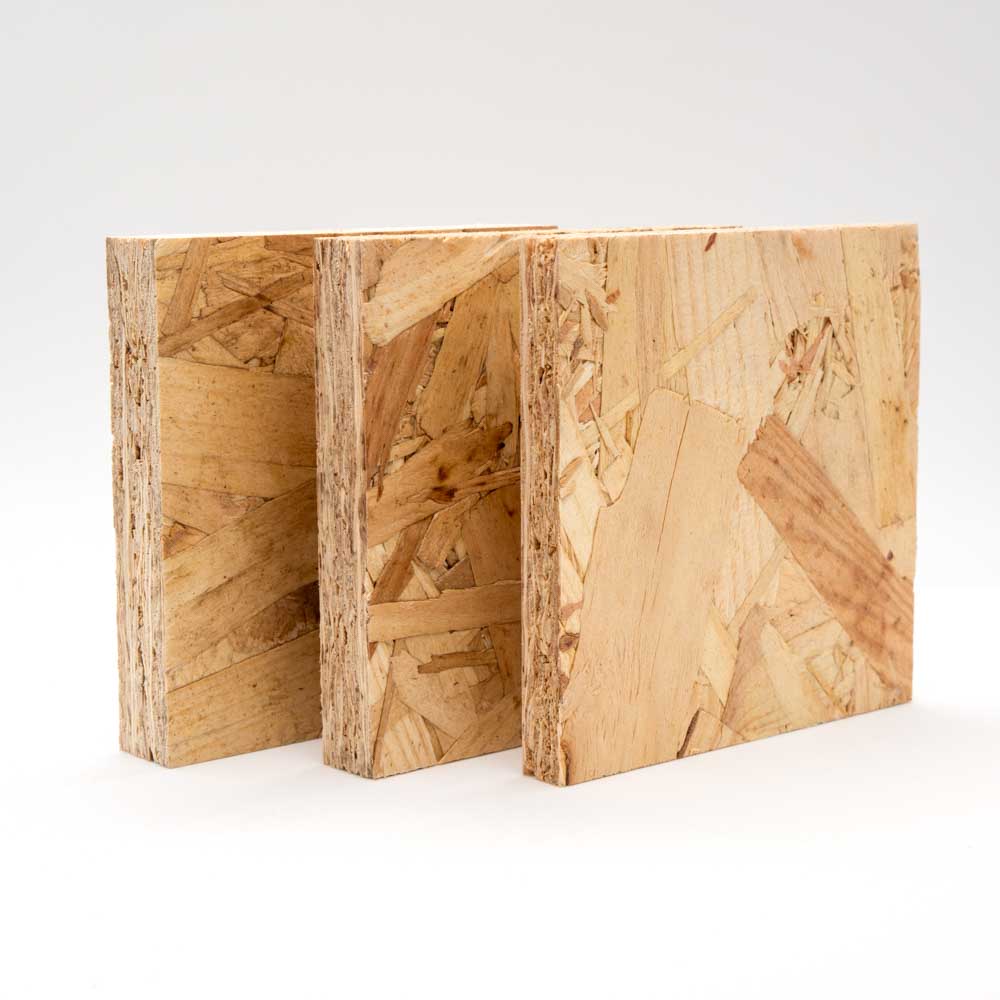
OSB, or Oriented Strand Board, is an engineered wood panel made from wood strands, flakes, or wafers arranged in layers and bonded with resin. It’s widely used in construction for sheathing walls, flooring, and roofing. While OSB offers excellent strength and cost-effectiveness, it’s vulnerable to moisture, which can lead to swelling, warping, and eventual deterioration.
Waterproofing your OSB is crucial, especially in the UK’s often damp climate and humid conditions. By taking the time to properly apply waterproof techniques, you’ll protect your investment and ensure the longevity of your construction project.
Materials
Before you begin the waterproofing process, gather the following materials:
Waterproofing product (sealant, paint, or membrane)
Paintbrush, roller, or sprayer (depending on the product)
Sandpaper (medium grit)
Clean cloths
Protective gear (gloves, goggles, and mask)
Putty knife or filler (for repairs if needed)
Preparation
Proper preparation is key to effective waterproofing. Follow these steps:
Clean the OSB surface thoroughly. Use a brush or cloth to remove any dust, dirt, or debris. For stubborn stains, a mild detergent solution can be used, but ensure the board is completely dry before proceeding.
Inspect the OSB pieces for any damage. Look for cracks, chips, or areas where the strands have begun to separate. Small imperfections can be filled with wood filler or epoxy designed for OSB. Allow any repairs to dry completely before moving on to waterproofing.
Lightly sand the surface with medium-grit sandpaper. This will help the waterproofing product adhere better to the OSB. After sanding, clean the surface again to remove any dust.
Waterproofing Methods
There are three main methods we recommend for making OSB waterproof: sealants, waterproof paints, and waterproof membranes. Each has its advantages, and the best choice depends on your specific application.
1) Sealants
Sealants are an excellent choice for smaller DIY-friendly projects or for treating the faces and edges of OSB panels. They’re easy to apply and provide a reliable moisture barrier. It is crucial to seal OSB boards to protect them from water damage. Some of the most common types of sealants are:
Polyurethane sealants
Silicone-based sealants
Acrylic sealants
How to Apply Sealants
Choose a sealant compatible with OSB and suitable for your project’s needs.
Apply the sealant using a caulking gun, focusing on the edges and any joints between panels.
Use a putty knife or your finger (wearing a glove) to smooth the sealant and ensure complete coverage.
Allow the sealant to dry completely according to the manufacturer’s instructions.
2) Waterproof Paints
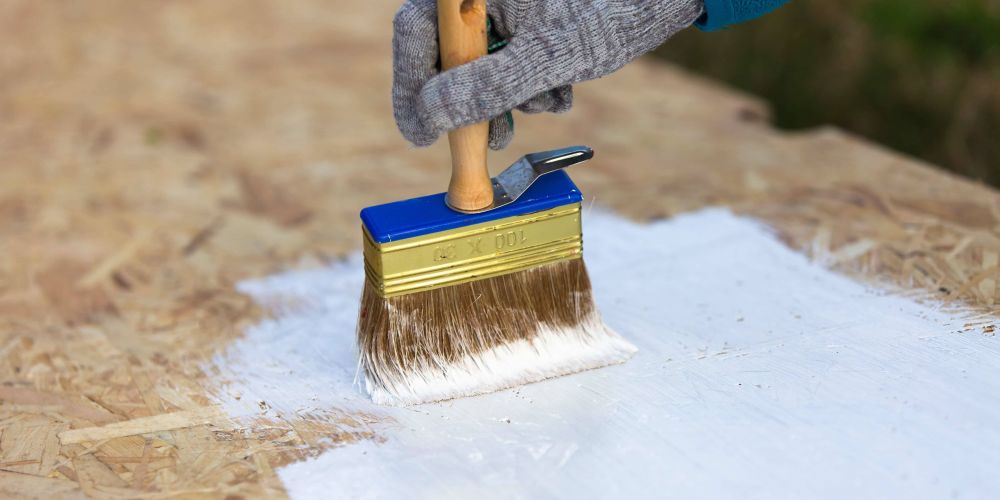

Waterproof paints are ideal for larger surfaces and provide even coverage across the entire OSB panel. When choosing the right paint, you should:
Look for paints specifically designed for use on wood or OSB
Consider elastomeric paints for added flexibility and durability
Ensure the paint is suitable for your project’s environment (interior or exterior)
How to Apply Paints
Stir the paint thoroughly before use.
Apply a thin, even coat using a roller or sprayer. A brush can be used for edges and hard-to-reach areas.
Allow the first coat to dry completely, typically 2-4 hours.
Apply a second coat for optimal protection.
Let the paint cure fully before exposing the OSB to moisture or stress.
3) Waterproof Membranes
Waterproof membranes offer the most comprehensive protection and are often used in high-moisture environments or for flat roofing applications. Some common membranes used in the UK are:
Self-adhesive bitumen membranes
EPDM rubber membranes
PVC membranes
How to Install Membranes
Measure and cut the membrane to size, allowing for overlap at edges and seams.
For self-adhesive membranes, peel back the protective layer and carefully apply the membrane to the OSB, smoothing out any air bubbles.
For non-adhesive membranes, apply an appropriate adhesive to the OSB before laying the membrane.
Seal all seams and edges according to the manufacturer’s instructions.
For added protection, consider using a membrane in conjunction with a sealant or paint system, especially if the membrane doesn't extend to the edges of the board.
Additional Protection Measures
To further enhance the waterproofing of your OSB, you should consider:
Edge Sealing: Pay special attention to the edges of OSB panels, as these are particularly vulnerable to moisture absorption. Apply a generous amount of sealant or several coats of waterproof paint to all exposed edges.
Proper Installation Techniques:
Maintain proper spacing between panels to allow for expansion and contraction.
Use appropriate fasteners and ensure they’re properly countersunk.
Install OSB with the grade stamp facing outward to ensure the correct side is exposed.
In roofing applications, always use underlayment between the OSB and roofing material.
Maintenance
Regular maintenance is essential to ensure the reliable performance of waterproofed OSB, helping it withstand the ever-changing British climate and providing structural defence against air and water infiltration.
Conduct regular inspections, particularly after extreme weather events.
Look for signs of water damage, such as swelling, discolouration, or softness in the OSB.
Address any damage promptly to prevent further issues.
Reapply waterproofing products according to the manufacturer’s recommended schedule, typically every 3-5 years for paints and sealants.
Waterproofing your OSB board is an essential step in protecting your construction project from moisture damage. By following this guide, you can significantly extend the life of your OSB and maintain its structural integrity.
Remember, the key to successful waterproofing lies in thorough preparation, choosing the right product for your specific needs, and proper application. Whether you opt for sealants, waterproof paints, or membranes, each method offers effective protection when applied correctly.
OSB Board
Browse our range of OSB/3 boards, available in 11mm, 15mm and 18mm thicknesses.
With over 14,000 5-star reviews backing our quality, speed and service, you know you can count on us. Whether DIY or trade, huge contract or small - we deliver the goods, tailored to your specs, on time and budget. Don't waste time searching - discover why over 530,000 happy customers have chosen us for all their cut-to-size wood and plastic since 2016.
Fast cutting, and delivery, of small bespoke bits of hexagrip board cut to size for my project - what a fantastic service!
PeterP,
5 hours ago
Verified
Easy to order
Easy to order, much easier than going to a DIY superstore. Helpful staff when I messed up and put collection instead of delivery.
Nancy,
6 hours ago
Verified
Did the job
Did the job. Two Orders 1 or 2wks apart. But when ordering, I did not 'appreciate' I'd have to specify grain direction of the external faces. Both Orders arrived with grain in wrong direction in the rectangles I ordered. This was extremely disappointing. Frankly, this should not happen. It's a cheat. You know ALL customers ordering plywood rectangles expect grain to follow the rectangles greatest dimension...the length, not the width.
Lindsay Turner,
7 hours ago
Verified
great product bang on time
great product bang on time
russell Jones m25 2qg,
8 hours ago
Verified
Very good quality products and an…
Very good quality products and an excellent delivery. I am very grateful. Thank you. I, heartily, recommend this seller.
Ileana Eliza Paunica,
11 hours ago
Verified
Ideal to protect kitchen table
Easy to order, easy delivery, perfect cut
Julia Judd,
13 hours ago
Verified
Fast efficient service
Fast efficient service. The panel fitted perfectly, thanks
Elliot Montgomery,
15 hours ago
Verified
Fast delivery and nicely packaged.
Fast delivery and nicely packaged.
Richard,
22 hours ago
Verified
Good competitive price and all panels…
Good competitive price and all panels ordered were exact to size and good quality. All delivered on time well packaged. The adhesive purchased to fix the panels proved to be difficult as it exited the tube in blobs so i ended up using double sided adhesive tape.
J Chaloner,
1 day ago
Verified
I neeasy ordering and quick delivery eded a board to complete a project…
I needed a board to complete a project and I was able to order the exact size and finish I needed easily. It was delivered exactly as estimated and very well wrapped
JC,
1 day ago
Verified
Very good service,very accurate cutting…
Very good service,very accurate cutting to our measurements.good products.
Fred,
1 day ago
Verified
Exactly what I wanted
Exactly what I wanted at a price, date and time agreed!! Well done.
Timothy Moore,
1 day ago
Verified
Cut My
Cut My, we're so good to us and understanding with our order. IAM giving them 5stars for how they helped us and they are an excellent company we would recommend them to all. Customer service is absolutely first class. Thank you all at CutMy Ken.
Kenneth Avery,
1 day ago
Verified
Excellent service.
Clear ordering on the website and items arrived promptly. The acrylic sheets were well protected and packaged; sizes exactly as requested. Excellent service!
David ,
1 day ago
Verified
Shelf
Good product
Liz Jarvis,
1 day ago
Verified
Fantastic company with good…
Fantastic company with good communication. Would definitely recommend and will use again.
Kevin James ,
2 days ago
Verified
Cut precise as requested
Cut precise as requested, and a very fast turn around
Mr ALAN MACMILLAN,
2 days ago
Verified
I got exactly what I ordered!
I got exactly what I ordered!
Anon,
2 days ago
Verified
Great company to deal with.
Having checked out a handful of different companies regarding the purchase of 2 clear acrylic sheets to replace old, cracked, discoloured sheets, we decided on CutMy. Their customer service was second to none and the patience shown by Molly and the rest of the team as I bumbled my way through my requirements was admirable! Every detail of the order was checked and agreed upon before the order was finalised.
The order duly arrived and I was very impressed by the quality of the acrylic sheets and the accuracy of the drilled holes. Screwing the sheets in place was a doddle and the finished result has exceeded expectantion.
I can highly recommend CutMy for their products, customer service and competative prices.
Gwenda Williams,
2 days ago
Verified
Great service
Great service. I needed some Perspex to replace the ones that had gone yellow in my outdoor lights. Easy guide to measuring and ordering was quick and easy with quick delivery. My lights look now like new.
Patricia Corner,
2 days ago
Verified
Pre-cut saves hassle
I wanted to add some shelves for extra storage in my shed but didn’t have the tools or confidence to cut a large sheet accurately down to size. Once I had measured then double & triple-checked I was able to choose the wood type and grade and enter the measurements for each piece. (The website is pretty simple to use and navigate). The plywood was delivered in good time and well-packaged to help prevent damage. Am pleased to say each shelf fitted perfectly and with minimal fuss. This service is definitely worth the price and saves so much time. Highly recommnded.
Steven Schooling,
2 days ago
Verified
Excellent quality and cut to…
Excellent quality and cut to perfection. packaging was suitably protective.
Philip Mckean,
2 days ago
Verified
Quality material,decent price
Quality material,decent price, looks great as a kitchen splash back
Robert Vlad ,
2 days ago
Verified
Great product but expensive delivery.
Great product but expensive delivery.
customer,
2 days ago
Verified
Good quality really quick delivery
Good quality really quick delivery
Kevin Alexander,
2 days ago
Verified
I made a mistake with my order but CUT…
I made a mistake with my order but CUT MY quickly change it.
PAUL CRABB,
2 days ago
Verified
After weeks of trying to get the right…
After weeks of trying to get the right size and strength for a top board for my aquarium cabinet , you came to my rescue. APPREHENSIVE waiting on its delivery, but spot on with all I hoped for and delivery on time. Thanks.
PETER SIMMONS,
2 days ago
Verified
The size was cut to exactly what I…
The size was cut to exactly what I wanted and now it is up it looks really good.
Trace,
3 days ago
Verified
Exactly what I needed thank you
Exactly what I needed thank you
Gail Deptford,
3 days ago
Verified
Easy to order
Easy to order. Good quality product. Arrived when expected.
customer,
3 days ago
Verified
Great service will use them again
Great service will use them again
Alyn,
3 days ago
Verified
Excellent service
Excellent service - item accurately cut, delivered promptly in perfect condition and very well protected.
GEOFFREY,
3 days ago
Verified
Perfect fit on my measurements…
Perfect fit on my measurements supplied. Solid & good quality shelves.
DAVID COULSON,
3 days ago
Verified
Great attention to detail and speed of…
Great attention to detail and speed of delivery
Custom cuts were made simple and really delighted with quick turn around, communication, speed of order to delivery and quality of product
Flat 6,
3 days ago
Verified
Great solution to update your space
A great product that makes it easy to update your space. Unfortunately, my order was damaged in transit, but customer service is excellent, and a replacement was dispatched. I've only given 4 stars as the original delivery was within London and subject to a different delivery provider, it's not clear when you buy that it means a delay and when you do get a date it's 9-5pm, when most delivery companies can now give a 1-2 hour window
Simon,
3 days ago
Verified
Excellent product with very prompt…
Excellent product with very prompt delivery
Richard,
3 days ago
Amazing customer service
Amazing customer service. Initial order arrived with largest piece damaged, but almost certainly due to delivery company as the packaging was excellent. Received replacement piece within one week.
Martin Poole,
3 days ago
Verified
Very quick service
Very quick service, fits perfectly, thank you.
Zoe,
3 days ago
Verified
Lovely items and delivered in great time
Lovely items and delivered in great time
K Brown,
3 days ago
Verified
Very quick delivery. Great customer service
Very quick delivery! Unfortunately the 1st product was slightly damaged. I sent an email explaining that id only just opened the package, even though it was delivered a few dsys before. T.B.H I was expecting to have to pay for the replacement at that point. But they sent out a replacement f.o.c, very quickly with an opology. Couldn't fault their customer service. Would highly recommend.
Mathew Wyles,
4 days ago
Verified
Used Cut My for the first time and was…
Used Cut My for the first time and was very pleased with the service. I only had a small order but found the website easy to order the steel I required from a very large selection on offer, it was cut exactly to the ordered size and arrived well packaged and quickly. The cost was reasonable considering the cutting and was still cheaper than geting 'locally' (which I usually try and do, but in this case because of what I required, it was not available) by the time I would have factored in mileage and time, etc. Would recommend.
Mr Grant,
4 days ago
Verified
Very easy to order and great experience
Very easy to order and results were perfect
GILES SARSON,
4 days ago
Verified
Great company!
Great company. Just what was needed!
Theresa,
4 days ago
Verified
Really good
Really good. We did have a problem with the order, but they helped us out immediately and everything was sorted, so I couldn't be happier and I will be back. Also, the packing was spot on and very well done and it was delivered in good time.
Andrew,
4 days ago
Verified
A really helpful service
A really helpful service, particularly if you don’t want to buy the required saw. The piece I got is good quality and cut perfectly.
L BAKER,
4 days ago
Verified
Materials cut to size.
Materials cut to size.
Very good quality.
Delivered ontime.
Easy website to use.
Andrew,
4 days ago
Verified
Great service.
Easy to purchase online, quick delivery and excellent product and price. Would recommend.
john n ,
4 days ago
Verified
Very easy to order and quick delivery!
Very easy to order and super quick to deliver. Great quality.
TF Repeat Customer or was.,
4 days ago
Verified
Great product
Great product, cut exactly to size. Delivery could be a bit faster but happy that the product arrived well packed and perfect. Overall a very good site to buy cut to size goods. I will use it again.
Virginia Mergl,
4 days ago
Verified
Amazing
Really easy to order quick and great service Really pleased with the quality of the product would recommend
Lorraine Boardman,
4 days ago
Verified
Excellent Cut My Order.
It was all very easy to place an order with Cut My, I needed Air Conditioning Covers, the order was delivered on time and all cut to size perfectly.
Steve,
4 days ago
Verified
Great service
What can I say? Exactly what I asked for, delivered quickly at a good price.
Definitely use again.
customer,
4 days ago
Verified
Great Perspex screen
Great product, easy to select size, style hole placement etc. and arrived safely too.
Colin Glover,
4 days ago
Verified
Great service
Great service. I just needed 2 extra shelves for my kitchen cupboards. they arrived very quickly and fit the spaces perfectly.
customer,
4 days ago
Protective top for upcycled furniture
Needed a protective top for a piece of furniture I had upcycled. I googled and came across CutMy, it was so straightforward the hardest part was measuring my table top, ordered and 2 days later it arrived. Couldn’t be happier!!
For a year I have been sanding and repainting the top as I thought getting a glass top would be too expensive. So amazed when I saw cutmy do glass look acrylic and the price is sooo reasonable. Couldn’t be happier! Looking for my next project so will definitely be ordering another sheet again soon. (Wish I could attach a photo)
Lucy Whitlock,
4 days ago
Verified
Good choice of acrylic
I found the exact material I was searching for.v IE 4mm thick acrylic. It was cut to the size I required and facilitated repair
WB,
4 days ago
Verified
Very good product
Very good product
Mr Craig Archer,
4 days ago
Verified
A bit slow in leaving factory and…
A bit slow in leaving factory and getting to us but nice skirting and architrave. Just allow two to three weeks so order early...
Kevin Andrews,
4 days ago
Verified
Order as expected
Order as expected. Second order and I am very impressed. Highly recommend.
Judd,
5 days ago
Verified
Good price and delivery time
It was a good experience overall. The price was good compared to other companies, and the delivery was good too. However, the edges of the 5 cm-thick Perspex were a little sharp, so I had to use a file to smooth them down. Apart from that, I was happy with the service.
Lamia Ibrahim,
5 days ago
Verified
The driver was polite and punctual.
The driver was punctual. We ran into a protest at Genoa airport closing the approach road. However the driver found the pedestrian access and did his best to explain what was happening in spite of language problems. I would recommend him.
David Wiggs,
5 days ago
Verified
resonable price, good quality
resonable price, timely delivery, good quality
Yogendra Kumar Gaihre,
5 days ago
Verified
brilliant service thanku great product
brilliant service thanku great product
karen,
5 days ago
Verified
Melamine coated mdf
All ordered sections were cut to correct sizes. Packaging was well done. There was a small section of damage on the bottom of one of the large sections but it was hidden in my construction so it wasn’t an issue for me and to be fair on the company, I didn’t mention it
James Smith,
5 days ago
Verified
Great service!
Very reasonable price, cut to perfect bespoke size - a great replacement for a greenhouse glass pane. Good comms re. delivery.
Rachel Pain,
5 days ago
Verified
Brilliant service
Brilliant service. Cut to size, well packaged to prevent damage and came when they said it would. Would definitely use them again for my next project
ARP Heating - Swindon,
5 days ago
Verified
Provided what I needed with good value…
Provided what I needed with good value for my mini diy project
Ryan Kendall,
5 days ago
Verified
Easy to use website for cut acrylic
Easy to use website for cut acrylic. Super precise cutting
MR R HALDER,
5 days ago
Verified
Great product and super finish on it
Great product and super finish on it. Will order again. Fast service as well.
customer,
5 days ago
Verified
Excellent quality product
Excellent quality product, only thing that I was sure I clicked but wasn’t very clear was the polished edges which obviously they didn’t come with
David,
5 days ago
Verified
Quality material
very good quality material and the delivery was on the spot
R Rabel,
5 days ago
Verified
Ordering was very easy
Ordering was very easy. Items were delivered in a timely manor. All items were as ordered. I would definitely use again.
Mr Sean Devitt,
6 days ago
Verified
The website was easy to navigate
The website was easy to navigate with the templates given to make sure the correct size/dimensions were ordered. Pricing was competitive. Delivery was prompt and I was kept up to date on when I could expect delivery. I ordered a sheet of marine plywood to replace a shattered glass garden table top.
Patricia Newlife,
6 days ago
Verified
Was ordering bespoke acrylic for the…
Was ordering bespoke acrylic for the garden. Found the website easy to use, delivery was fast. Well packaged and doing the trick. Would use this company again if i needed a similar product
stoney graham,
6 days ago
Verified
Great Experience, cut to size
Ordered, cut to size required and delivered quickly.
Jane,
6 days ago
Verified
Great item cut exactly to size and a…
Great item cut exactly to size and a prompt delivery. What more can you ask for?
Colin,
6 days ago
Verified
Their service was good and prompt
Their service was good and prompt. The cut perspex arrived here in good condition for they took great care in ensuring it didn't suffer any damage and their pricing was quite reasonable.
Anthony Pace,
6 days ago
Verified
Final results are great
Final results are great, we are really pleased. Easiest way to purchase this product by far , love the website, very easy to navigate. Price was very reasonable. Only advice I would offer is to read the delivery process carefully, it took a week longer than initially indicated.
eleanor wilkins,
6 days ago
Verified
excellent service
excellent service
Euroscreen Uk ltd,
6 days ago
Verified
Perfect fit and fast delivery.
I needed to replace two Ikea kitchen base unit end panels which had blown. I couldn't find exactly the right sizes anywhere, so I replaced them with one new panel cut to size from Cut My. It was so easy, measure, order, and fit was perfect, fully sealed around all edges and arrived in perfect condition. Definitely the easiest way especially if you don't have the right tools to accurately cut. Looks much better having a single panel too.
Alan Barrington,
6 days ago
Verified
Custom cut kitchen Backsplash
Beautiful product exactly to dimensions. First order was damaged in shipping but it was replaced quickly and completely for free, great customer service.
Milo Baraclough,
1 week ago
Verified
Ive used this supplier a few times now…
Ive used this supplier a few times now and always have been happy with the product and delivery service
Edward Hall,
1 week ago
Verified
Great quality set of samples.
Great quality set of samples.
MICHAEL,
1 week ago
Verified
Fabulous service & good quality product…
Fabulous service & good quality product - issue with first one delivered but rectified immediately - thanks
Dianne Baker,
1 week ago
Verified
All good easily fitted
All good easily fitted
Mr Len Elliot,
1 week ago
Verified
I had a few problems with the delivery…
I had a few problems with the delivery people.
Contacted Cut My. A lovely lady Apologised, and sorted it out for me. Delivery Charge was Refunded too, due to the problem. I’m very grateful. Would recommend them 100%
Name anne moir,
1 week ago
Verified
Makes panelling much easier!
Really easy to order. Good that they also give you the measurements of how to put the panelling on the wall! Made it so much easier for me to panel and will use again. Delivery was also quick
Amy,
1 week ago
Verified
Perfect service for my needs
Perfect service for my needs. Had the plywood 9mm thickness I couldn't get from local builder supplies or DIY stores. And all cut neatly to size for which I didn't have the tools.
Fast delivery too. Took the stress out of the job.
Sarah S.,
1 week ago
Verified
Excellent customer service and speed of…
Excellent customer service and speed of service. Product was correctly cut to the sizes specified and will use again and thoroughly recommended.
Alastair Crosthwaite,
1 week ago
Verified
Marine ply
Good service
Justin Backhouse,
1 week ago
Verified
everything arrived SO fast
everything arrived SO fast - great communication and products
Samantha,
1 week ago
Verified
Excellent and has made my wardrobe far…
Excellent and has made my wardrobe far more useful, it was all hanging rails before. Had to have the shelves custom made due to the size. Very very heavy though, I couldn’t lift the parcel and had to split them to carry them. The courier left them out in the rain, but luckily they were well wrapped
Helen,
1 week ago
Verified
Helpful and great service
Helpful and great service. Good quality products
K.G,
1 week ago
Verified
Quick delivery and perfect size.
Quick delivery and perfect size.
Joan Crane,
1 week ago
Verified
Exactly what i asked for many thanks
Exactly what i asked for many thanks
David,
1 week ago
Verified
Simple ordering process
Simple ordering process, clear instructions, order arrived in record fast time. Will be ordering again!
Gail Davies-Walsh,
1 week ago
Verified
Perfect for the job
The arrived well packed and on date stated. The acrylic was easy to work with and fitted perfect for the job I was using for. Would recommend.
Steve4659 Davies,
1 week ago
Verified
Second lot of this copper colour…
Second lot of this copper colour splashback we have bought, suits our kitchen well, good value, quick delivery
Goodtwin,
1 week ago
Verified
Excellent customer service
Excellent customer service. Purchased twice from this company. Very friendly. Great delivery service.
Mrs O'brien,
1 week ago
Verified
Impecable service
Impecable service, they delivered all the MDF pieces I ordered (c13), perfectly measured, packing was superb to prevent issues and it was done really quick. First time using them and I'd definitely recommend them.
L,
1 week ago
Subscribe to our email newsletter
Sign up here for our occasional email newsletter with new products, design ideas and discounts across our huge and growing range of products. (You can unsubscribe at any time of course.)